Silver plating is more than just an elegant finish—it’s a game-changer in the industrial world. From boosting electrical conductivity to providing robust corrosion resistance, discover why silver plating is essential in industries like electronics, aerospace, and more as we delve into its significant benefits and wide-ranging applications.Continue Reading
Silver has been used for millennia in coins and ornamental objects, with silver plating emerging in the 18th century. As time progressed, a revolutionary technique called electroplating emerged in Italy during the early 19th century. This innovation quickly gained global acceptance and became the modern industrial standard for silver plating. Today, electroplating is the predominant method used in the industrial world to impart the lustrous beauty of silver onto a wide array of objects. But how does silver plating work? We break it down below.Continue Reading
The hard anodizing process, or hard coat anodizing, is a specialized surface coating treatment that greatly enhances the material properties of aluminum, especially for aluminum-made products, parts, and components used in government and defense-related applications. Hard anodizing is achieved through an electrochemical reaction that increases the thickness of the naturally occurring oxide layer on aluminum surfaces. The process can create a relatively thick layer of hard aluminum oxide on the surface, allowing a coating thickness of up to 75 microns. The hard anodizing process, called Type III anodizing, is the standard for government and defense contracts that meets U.S. military specification Mil-A-8625 standards. Continue Reading
With the development of new processing methods and due to its unique properties, platinum became integral to many pieces of modern technology. Now about 20 percent of all manufactured goods globally either contain platinum – including catalytic converters, dental equipment, electrodes and jewelry – or used as a catalyst when making detergents, explosives, plastics and other industrial processes. Platinum energy resources contribute to sustainability and makes a positive environmental impact – especially in the world of renewable energy, with one of the most exciting developments involving the use of platinum plating being the development of hydrogen fuel cells.Continue Reading
The process of metal injection molding involves forcing powdered metal feedstock into a cavity mold while under pressure. This tooling mold uses two hardened dies made from steel that has been machined into the exact shape of the component. This process usually involves stainless steel alloys, but can be used with other metals as well. Metal injection molding is similar to injection molding, but uses powdered metal instead of molten plastic as a feedstock.Continue Reading
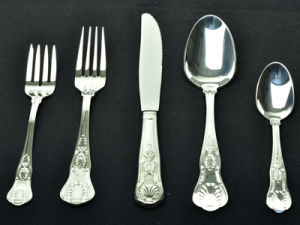
Antimicrobial silver electroplating is advantageous to manufacturers that rely on the production of sterile equipment, principally for those in the medical and food industries. Silver electroplating, or silver plating as it’s commonly referred to, is a finishing process in which a thin layer of silver ions (Ag+) is deposited onto a substrate of a metal through electrolysis. Continue Reading
Silver offers several important properties: the highest thermal and light conductivity, the lowest melting point and weight, and its ability to reflect light. It’s also very versatile and easy to fabricate into components, while it also can be easily alloyed with other metals like tin and aluminum. Silver electroplating solutions are highly adaptable, with options that include silver-plating of gold, copper, stainless steel, or other alloys often used in batteries. Continue Reading
Military-grade surface finishing specifications – used to protect the surfaces of military equipment – have been developed over the years to ensure the readiness of various branches of the armed forces. In military jargon, these “mil-spec” finishes far surpass those needed in most civilian industries. Many of these mil-spec standards for surface finishing have proven so resilient that many have been adopted for non-military use. All surface finishes for military equipment must meet very stringent requirements to withstand the rigors of the battlefield, which highlights the significance of working with a defense metal finishing company.
Besides making equipment more durable, perhaps more important is the corrosion resistance, lifespan expansion, and maintenance reduction that surface finishing offers. Continue Reading
The excavation at an ancient Roman fort in Germany in the 1940s shows how far back coating metals with phosphates goes. Several iron items were found in remarkably good condition, with their surfaces converted into a blue iron phosphate coating that resisted corrosion remarkably well over the millennia. The widespread use of phosphate coatings in modern society did not begin until the mid-19th century, however, with the discovery that hot iron treated with coal dust and potassium phosphate resisted corrosion. From 1869, a variety of methods for coating metals with phosphates to protect iron and steel from corrosion were patented, and the process became increasingly widespread. Zinc and manganese phosphate coatings – the two most common types of phosphate coatings – are now widely used for a number of industrial purposes. Continue Reading
As an electrochemical process, anodizing changes the surface of metals to make them more durable to wear, corrosion-resistance, and to give them an attractive finish. The process increases the natural oxide layer that coats metal parts, though it is most commonly used with aluminum and its alloys. This aluminum oxide results in a thin protective layer that protects and covers the top metal layer. Though anodization processes exist for other nonferrous metals – such as zinc, magnesium and titanium – and there are processes that use aluminum plate to anodize color into other metals, what follows mainly addresses the color anodization process used for aluminum, with a more in-depth focus upon hard coat anodized color dyeing. Continue Reading








 Get In Touch
 Directions
 Work With Us
 Our News